.png)
Introduction
Creating an online course used to be a long and resource-intensive process.
Educators had to spend weeks planning lessons, writing scripts, designing presentations, recording videos, editing content, creating quizzes, and managing student communication.
Today, artificial intelligence is dramatically changing that process.
AI is not replacing educators.
It is removing repetitive work so educators can focus more on teaching, expertise, and student outcomes.
From generating course outlines to automating marketing campaigns, AI is helping creators launch educational products faster than ever before.
For educators, coaches, consultants, and subject matter experts, this shift represents one of the biggest opportunities in the creator economy.
Why AI Is Transforming Online Education
The online education market has become increasingly competitive.
Thousands of new courses are launched every day.
Creating high-quality educational content quickly has become a major advantage.
AI helps educators by:
Reducing content creation time
Lowering production costs
Improving personalization
Automating repetitive tasks
Accelerating course launches
Increasing scalability
This allows educators to focus on delivering value instead of getting stuck in operational work.
1. AI Helps Generate Course Ideas Faster
One of the biggest challenges educators face is deciding what to teach.
AI tools can analyze:
Search trends
Student questions
Industry discussions
Market gaps
Popular learning topics
This helps educators identify high-demand subjects before creating a course.
Instead of guessing what students want, creators can make data-driven decisions.
Platforms increasingly use search behavior and user interest signals to understand content demand and improve recommendations for creators. VideoMart's search-driven insights philosophy reflects this growing importance of audience demand intelligence in content creation.
2. Creating Course Outlines Takes Minutes Instead of Weeks
AI can quickly generate:
Course structures
Lesson breakdowns
Learning objectives
Module sequences
Assessment ideas
Educators no longer need to start from a blank page.
AI acts as an assistant that accelerates planning while educators refine and validate the final content.
This significantly reduces the time required to build comprehensive learning programs.
3. AI Simplifies Script Writing
Writing scripts for video lessons can take dozens of hours.
AI tools can help educators:
Draft lesson scripts
Generate examples
Create summaries
Simplify complex concepts
Adapt content for different skill levels
This does not eliminate the educator's role.
Human expertise remains essential for accuracy, experience, and practical insights.
However, AI dramatically reduces the initial workload.
4. Faster Presentation and Slide Creation
Creating visually appealing educational materials often requires design skills.
AI-powered presentation tools can:
Generate slide layouts
Suggest visuals
Create diagrams
Improve formatting
Summarize content into presentation-ready formats
This allows educators to focus on teaching rather than graphic design.
5. AI Is Making Video Production Easier
Video production has traditionally been one of the most expensive parts of course creation.
AI now helps with:
Automatic editing
Subtitle generation
Noise reduction
Background cleanup
Voice enhancement
Translation and dubbing
Some AI tools can even convert text into educational videos.
As a result, individual educators can now produce professional-looking content without large production teams.
6. Automatic Quizzes and Assessments
Assessments are essential for learning outcomes.
AI can quickly generate:
Multiple-choice questions
Assignments
Practice exercises
Scenario-based assessments
Certification tests
This allows educators to build more engaging learning experiences while saving significant preparation time.
7. AI Enables Personalized Learning Experiences
Every student learns differently.
AI can help educators personalize:
Learning paths
Content recommendations
Practice exercises
Difficulty levels
Revision materials
Personalized learning increases engagement and completion rates.
As educational platforms evolve, AI-driven recommendations are becoming increasingly important in improving user experiences and content discovery. VideoMart's vision also emphasizes AI-powered ecosystems and intelligent recommendations to help both creators and users succeed.
8. AI Makes Course Translation and Localization Easier
Educators are no longer limited to a single language audience.
AI can assist with:
Translations
Voice dubbing
Subtitle generation
Localization of examples and content
This opens global markets for educators.
A course originally created in English can now reach learners across multiple countries with significantly lower localization costs.
9. Marketing Courses Has Become Much Faster
Creating a great course is only part of the challenge.
Selling it is equally important.
AI helps educators generate:
Landing page copy
Email campaigns
Social media posts
Video scripts
SEO articles
Advertising copy
This reduces the time needed to build marketing campaigns and improves consistency across channels.
10. AI Improves Student Support
Student support often becomes difficult as enrollments grow.
AI-powered assistants can help answer common questions regarding:
Course access
Learning paths
Assignments
Technical issues
Frequently asked questions
This improves student experiences while reducing support workloads.
Educators can then dedicate more time to high-value interactions.
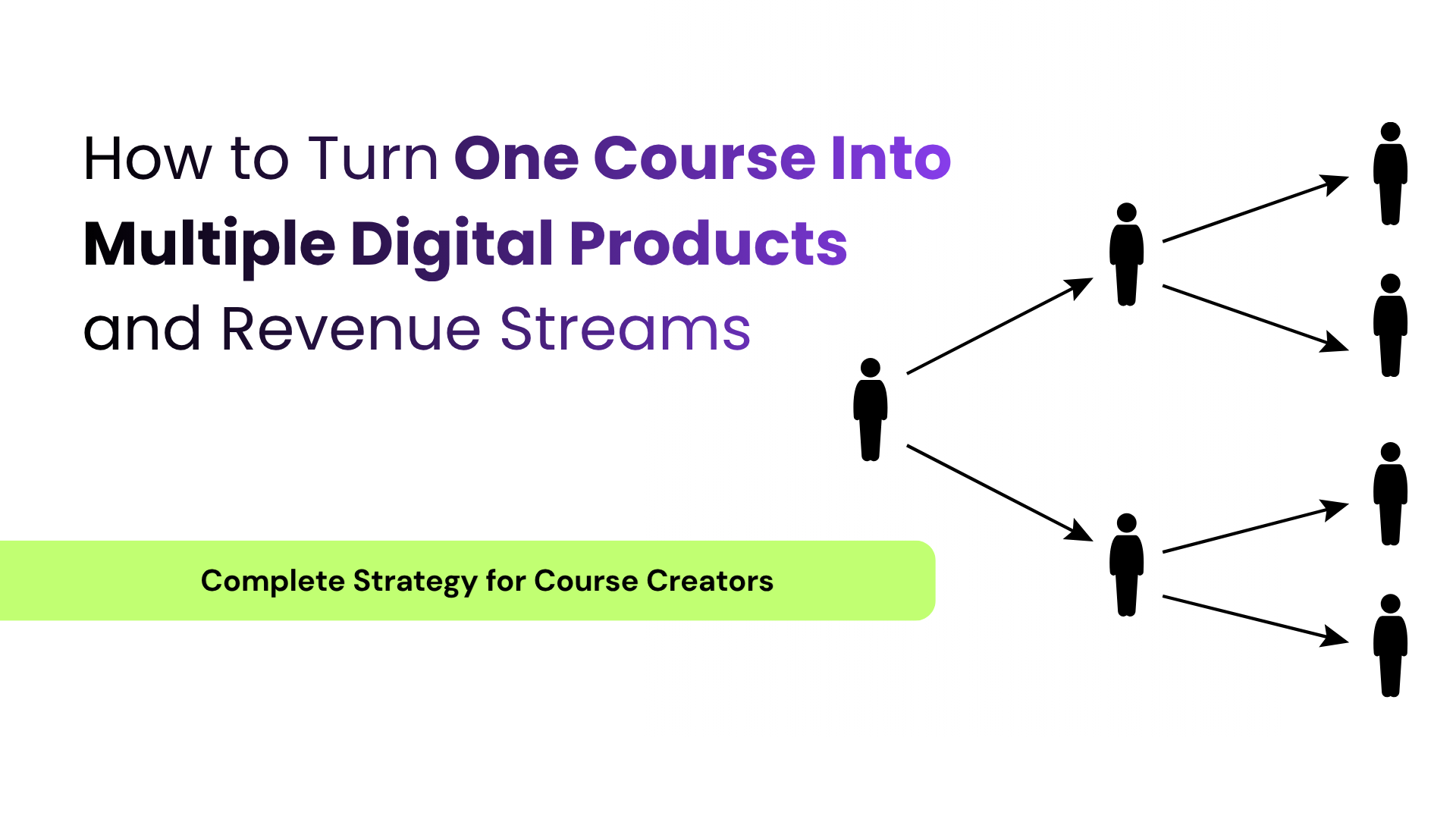
11. Faster Content Repurposing
One course can now become multiple products.
AI can transform educational content into:
Blog articles
Social media content
Podcasts
Guides
Short videos
Email newsletters
This dramatically increases content efficiency.
Educators can expand their reach without constantly creating new material from scratch.
12. AI Is Helping Educators Monetize Expertise Faster
Perhaps the biggest impact of AI is speed.
Launching a course that previously required months of work can now take weeks.
This means educators can:
Test ideas faster
Enter markets earlier
Launch multiple courses
Build educational businesses more efficiently
The creator economy increasingly rewards speed, adaptability, and niche expertise.
AI lowers barriers to entry while enabling educators to focus on what truly differentiates them—their knowledge and experience.
Platforms that empower direct creator monetization are becoming increasingly important as educators seek sustainable business models beyond advertising dependence. VideoMart's creator-first philosophy is built around helping creators monetize valuable content directly while maintaining control over pricing and earnings.
What AI Still Cannot Replace
Despite its capabilities, AI still cannot replace:
Real Experience
Students value practical insights and lived experience.
Human Empathy
Learning often requires motivation, encouragement, and emotional understanding.
Original Thinking
AI can assist with content generation, but true expertise still comes from educators.
Trust and Authority
People buy courses because they trust educators.
Trust remains deeply human.
AI should therefore be viewed as a powerful assistant rather than a replacement.
Challenges Educators Should Consider
While AI provides enormous benefits, there are also risks.
Generic Content
Overreliance on AI may result in courses that lack originality.
Accuracy Issues
AI-generated information must always be reviewed and validated.
Increased Competition
Because AI lowers production barriers, more creators will enter the market.
This means expertise and differentiation become even more important.
The Future of AI in Online Education
The next generation of educational platforms may include:
AI tutors
Real-time adaptive learning
Personalized course journeys
Intelligent content recommendations
Automated assessments
AI-powered creator analytics
The future of education will likely combine human expertise with AI efficiency.
Educators who embrace these tools early may gain significant advantages.
Frequently Asked Questions
Will AI replace online educators?
No. AI can automate repetitive tasks, but expertise, trust, and human interaction remain essential.
Can AI create an entire course?
AI can assist with outlines, scripts, quizzes, and marketing materials, but human review and expertise remain critical.
Is AI useful for small educators?
Yes. AI is particularly valuable for independent creators because it reduces production costs and saves time.
Does AI make course creation easier?
Absolutely. AI significantly accelerates content creation, editing, localization, and marketing workflows.
Should educators use AI?
Most likely, yes. AI can improve productivity while allowing educators to focus on delivering better learning experiences.
Key Takeaways
AI is dramatically reducing the time required to create and launch courses.
Educators can automate planning, scripting, assessments, and marketing.
Personalized learning experiences are becoming more accessible.
AI lowers production costs and increases scalability.
Human expertise remains the most valuable asset in education.
The future of online learning will likely combine AI efficiency with human insight.
Conclusion
Artificial intelligence is fundamentally changing how educational businesses operate.
Tasks that once required large teams and months of work can now be completed significantly faster.
For educators, this creates an enormous opportunity.
The winners in the next phase of online education may not necessarily be those with the largest budgets.
They may be the educators who learn to combine human expertise with AI-powered efficiency.
Because while AI can help create courses faster—
students still learn best from people who genuinely understand their problems, experiences, and goals.

.png)